Updated October 2026: we re-checked flight routes, the film permit process, equipment and drone rules, and on-the-ground logistics for this guide.
So why film in Nicaragua? Because the country has quietly become one of Central America’s most compelling destinations for international film and commercial production. While Costa Rica and Mexico have long dominated the region’s production landscape, Nicaragua offers a rare combination of untouched locations, notably lower costs and a growing pool of bilingual production professionals — all about three hours by air from Miami.
At Mosaico Audiovisual, we’ve been producing commercials, documentaries and cinematic content in Nicaragua since 2005. Here’s why more international production companies are choosing to shoot here — and what you should plan for before you book flights.
Dramatic Location Diversity in a Compact Country
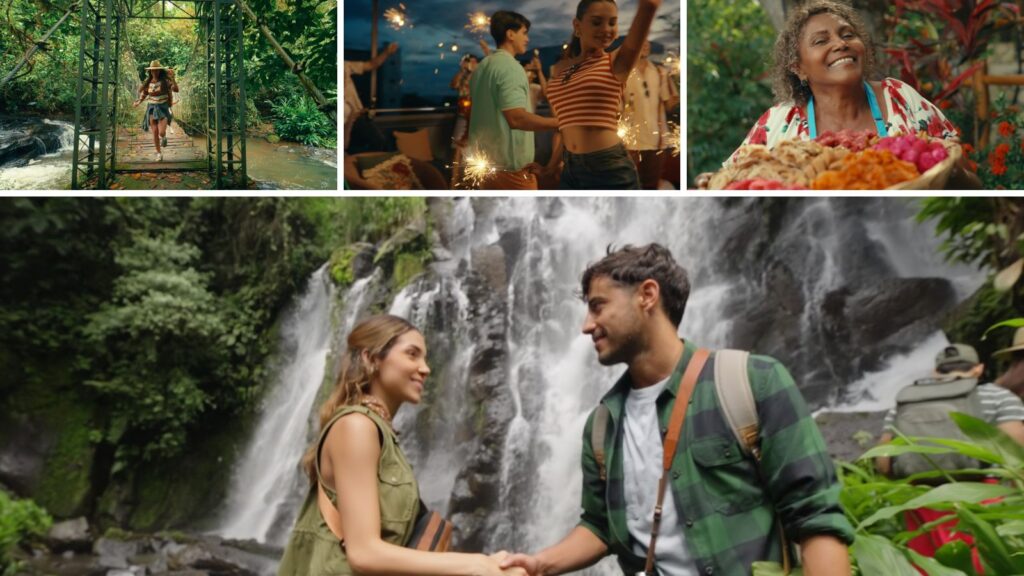
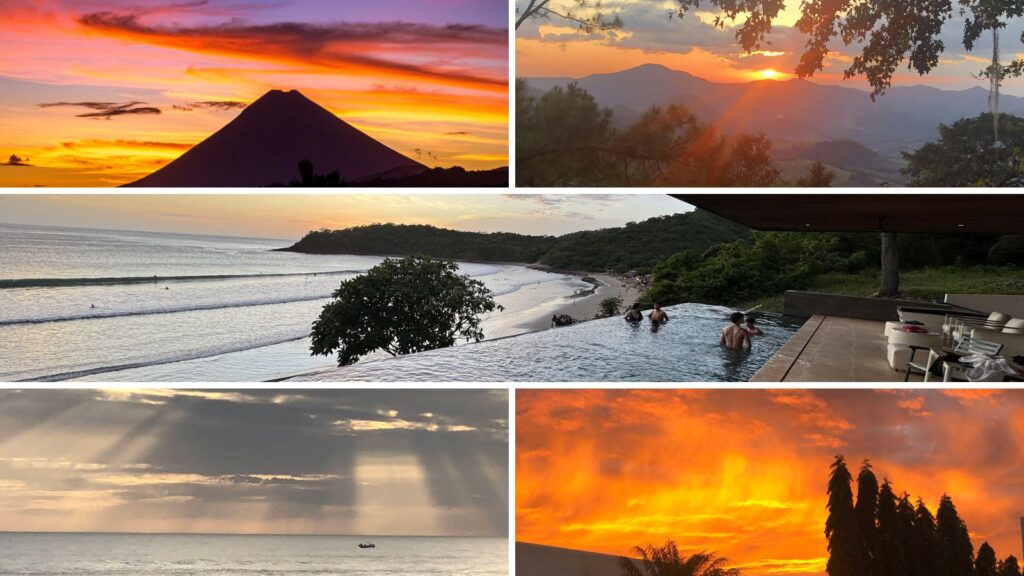
The location diversity is hard to match. Nicaragua packs an extraordinary range of landscapes into a country roughly the size of New York State. Within a single production schedule, you can shoot on Pacific beaches, at the rim of an active volcano, in colonial cities founded nearly 500 years ago, through dense tropical jungle and on a volcanic island in the middle of a freshwater lake.
That diversity means fewer travel days, lower logistics costs and a wide variety of looks without crossing borders. Granada, Masaya, León and the Pacific coast all sit within roughly two hours of Managua, so a two-week shoot here can deliver a visual range that would often take several countries elsewhere. For a location-by-location breakdown with drive times and permit notes, see our guide to 10 film locations in Nicaragua.
Production Costs That Stretch Your Budget
This is the part that gets producers’ attention. Nicaragua is one of the most cost-competitive places to shoot in Central America. The UK producers’ association Pact, in its Nicaragua country guide, notes that prices often come in at around 50% of what it costs to shoot in Costa Rica, with locations, local talent and support crew described as very inexpensive.
In practice, the savings show up across most local budget lines: crew day rates, location fees, transportation, accommodation and catering. A full production day with a professional local crew of 15–20 people — cinematographer, gaffer, sound engineer, art department and production assistants — typically costs a fraction of what the same crew would cost in San José, Costa Rica. Location fees are often modest or negotiable.
What doesn’t get cheaper
Lower cost doesn’t mean lower quality — it means your budget goes further, and on many jobs that translates into extra shooting days for the same money. Be realistic about what doesn’t change, though: international flights, any specialized crew you fly in, and gear that isn’t available locally cost roughly the same wherever you shoot. The more of your package you can source in Nicaragua, the bigger the difference. We’ll show you exactly where the savings land in a line-item budget before you commit.
About 3 Hours From Miami
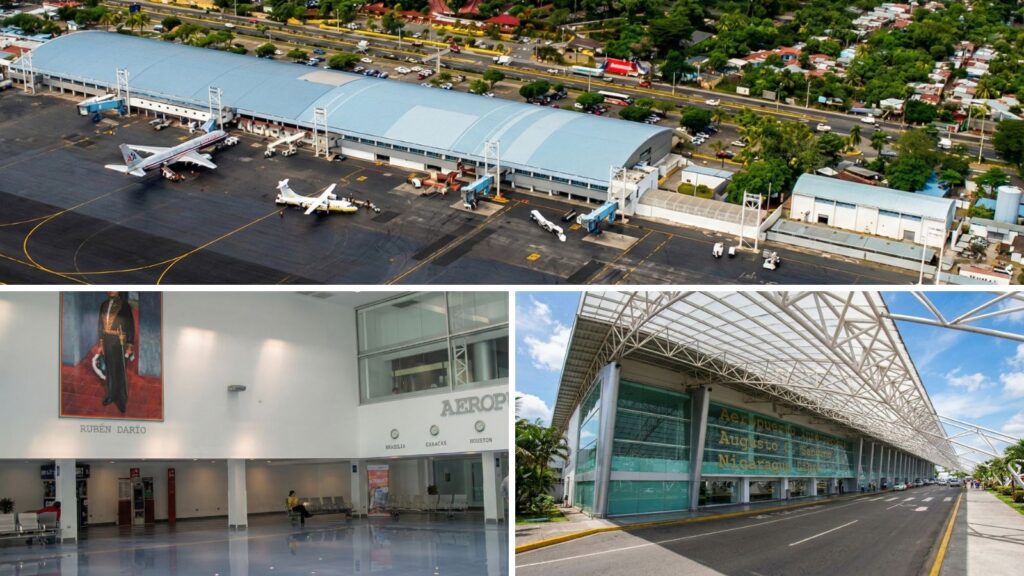
Geography matters in production. Managua’s Augusto C. Sandino International Airport (MGA) has nonstop flights from Miami, scheduled at roughly 2 hours 35 minutes to 3 hours, as well as nonstop service from Houston. A producer on a morning flight out of Miami can be on a location scout the same afternoon. Airline routes do change from season to season, so we always confirm current schedules when we plan travel with clients.
This proximity makes Nicaragua practical for productions with tight schedules or clients who want to be on set. Equipment that can’t be sourced locally can be flown in quickly, and rushes can be sent back for client review without major delays. Nicaragua also stays on UTC-6 all year (no daylight saving time), which keeps calls with US clients simple.
Compare this to far-flung production destinations like South Africa, Thailand or Eastern Europe — Nicaragua delivers exotic, tropical locations with short-haul travel logistics from the US.
Experienced Bilingual Crews
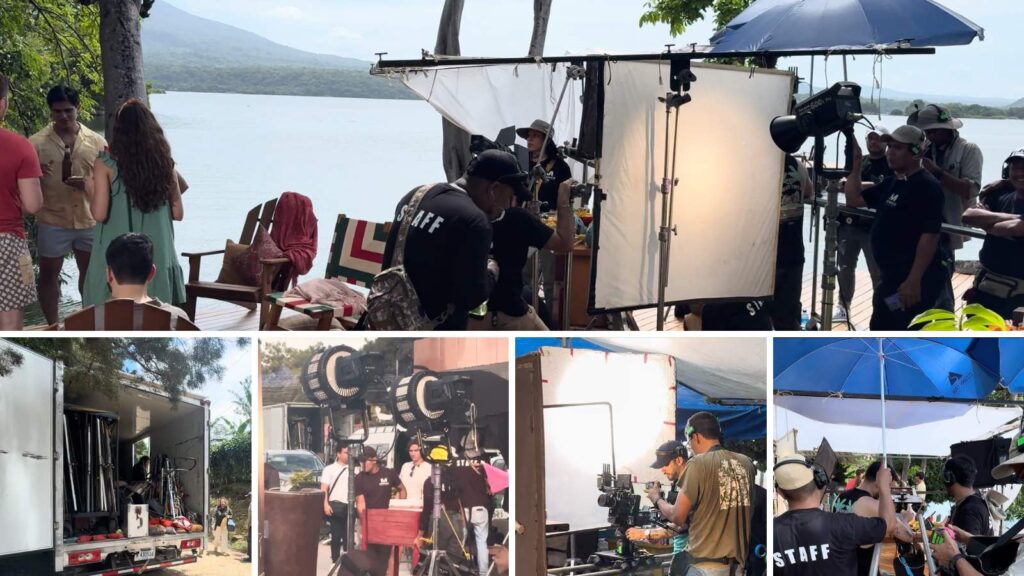
Nicaragua’s production community has grown steadily over the past two decades. Local crews have worked on international commercials, documentary series and feature films alongside production teams from the United States, Mexico, Spain and across Europe.
At Mosaico, our core team is fully bilingual in English and Spanish. We regularly coordinate with American and European line producers, agency creatives and directors who expect international-standard communication, scheduling and problem-solving on set.
Key crew positions available locally include directors of photography, gaffers, grips, sound engineers, art directors, wardrobe stylists, makeup artists, production coordinators, drivers and production assistants. The local pool is smaller than in Mexico or Colombia, so for larger productions or highly specialized roles we help bring in crew and gear from neighboring countries or the US. On-camera talent comes from our own casting database in Managua.
Year-Round Tropical Light
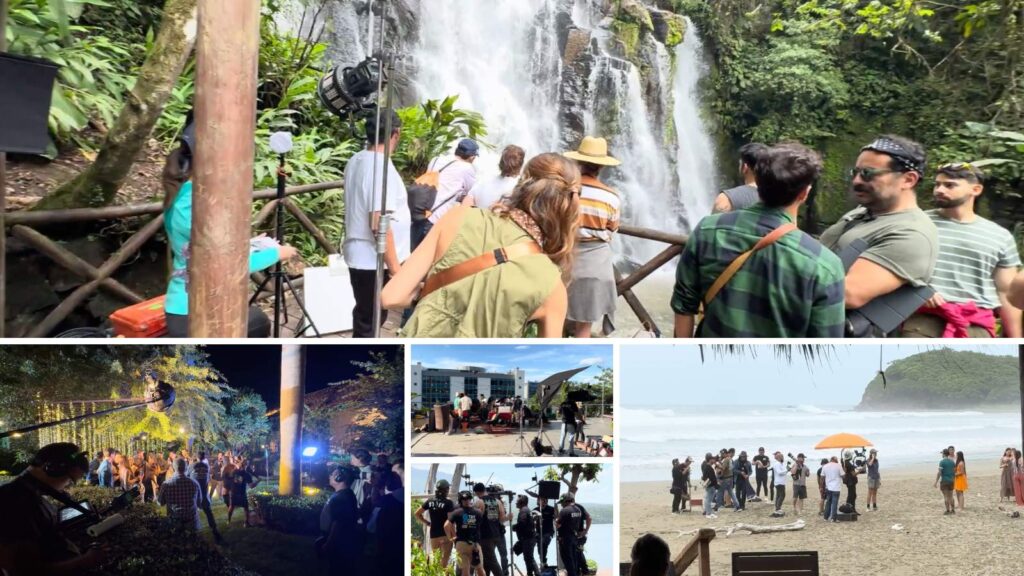
Cinematographers love Nicaragua’s light. At roughly 12 degrees north of the equator, day length stays close to 12 hours all year, so sunrise and sunset times barely move between seasons. The trade-off is that the sun climbs and drops quickly: golden hour is short but intense, so we build call times around it. During the rainy season, dramatic cloud formations add real production value to exterior shots.
The dry season (roughly December to April) brings reliable sunshine and clear skies on the Pacific side — ideal for beach, lifestyle and outdoor commercial work. Two things to plan for: strong trade winds along the southern Pacific coast and Lake Nicaragua early in the year, and haze from agricultural burning late in the season. The rainy season (roughly May to November) brings lush green landscapes and big skies, and on the Pacific side it often follows a pattern of clearer mornings and afternoon showers, leaving plenty of shooting hours. The Caribbean coast is wetter for much of the year.
Plan around these patterns and you get fewer weather delays and more predictable scheduling — a significant advantage for productions working on tight timelines and fixed budgets.
Untouched, Unbranded Locations
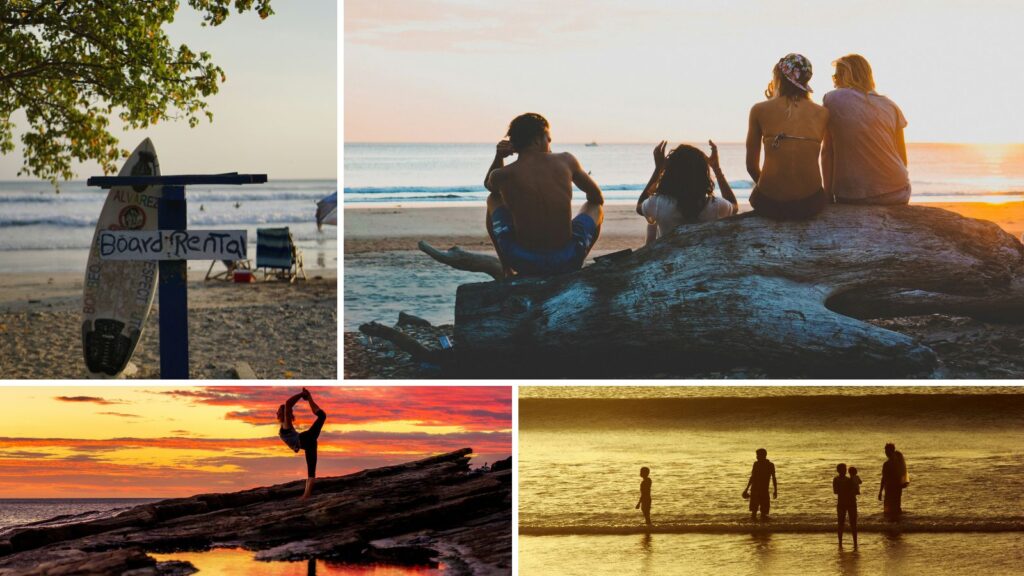
One of Nicaragua’s greatest assets for international productions is what much of the country doesn’t have. Step outside Managua and the main tourist hubs and you’ll find few global chains, strip malls or overdeveloped resort strips. On many beaches, what you see on the monitor really is untouched coastline.
This is increasingly valuable for brands that want authentic, non-generic locations. A coffee commercial shot on a working plantation in Matagalpa, a beer commercial on a real fishing beach, an adventure campaign on a genuine volcanic landscape — these locations deliver an authenticity that is hard to recreate on a soundstage or find in overdeveloped production destinations. And when the script calls for a modern urban look, Managua has that too.
Permits, Gear and Drones: What to Plan For
Nicaragua doesn’t offer a film incentive program, and the paperwork runs through government agencies and local authorities. None of it is unusual, but it needs lead time — and it’s where an experienced local partner saves you the most headaches.
Film permits
Foreign crews register their project before arrival. Depending on the project, permits are handled through INTUR, the Nicaraguan Tourism Institute, and the Cinemateca Nacional: you submit a synopsis, shooting schedule, flight details, crew and passport information and an equipment list, and receive an official letter for entry and equipment clearance. Timelines vary from project to project, so start the conversation early. National parks and other protected areas need their own permits, as does exclusive use of streets or public spaces. Approval depends on the project, and documentary or news-style content can get a closer review — share your subject early and we’ll tell you honestly what’s feasible.
Bringing camera equipment
Nicaragua is not an ATA Carnet country, so your gear enters under the documentation tied to your filming authorization. Send us a detailed equipment list with serial numbers and values as early as possible. We can also supply cameras, lighting, grip and sound locally to reduce what you need to fly in.
Drones
Drones need the most planning. Under Law 1230 (December 2024), bringing a drone into Nicaragua or flying one requires prior authorization from the Ministry of the Interior, which is granted only in special cases — and drones that arrive without it are confiscated at customs. Don’t lock a board that depends on aerials until we’ve confirmed what’s possible for your project; we’ll plan alternatives such as high vantage points, cranes or vehicle rigs.
Complete Production Services Available
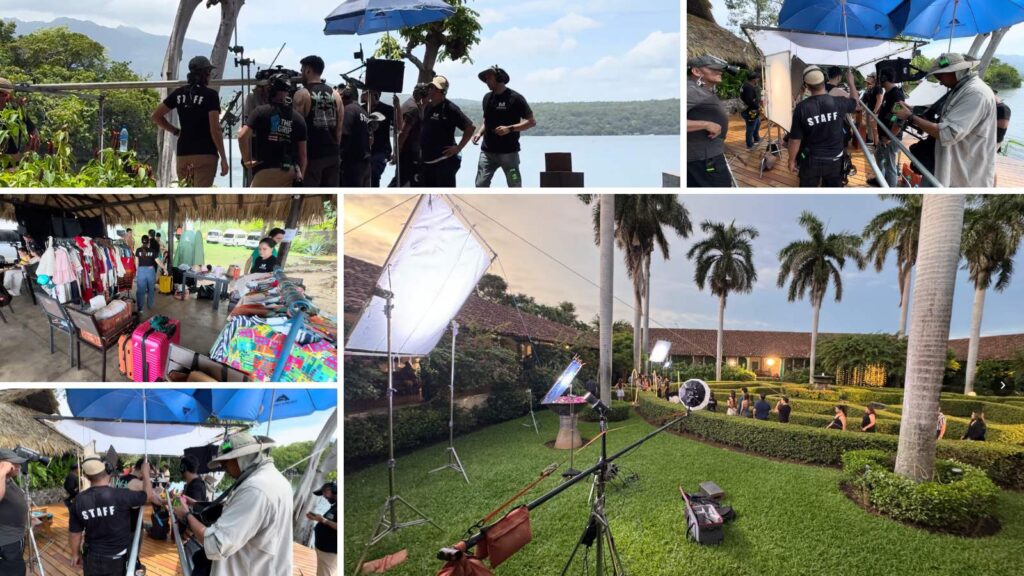
International productions don’t need to figure out Nicaragua on their own. A full-service local partner like Mosaico Audiovisual covers the whole chain: location scouting across the country with detailed photo and video reports, local casting with access to talent databases, permits and government coordination, professional equipment rental (cameras, lighting, grip and sound), transportation logistics, accommodation booking, fixer services, and post-production including editing, color grading and sound design.
See how we work with visiting crews on our film production services in Nicaragua page, or browse our full list of services (in Spanish).
Having a trusted local production partner eliminates the biggest risk of filming in an unfamiliar country: the unknown. We’ve solved just about every logistical challenge Nicaragua can throw at a production — from moving a 40-person crew to a remote volcanic island to securing last-minute permits for a sunrise shoot at a national monument.
What About Safety and Infrastructure?
This is the question every producer asks, and it deserves a straight answer. Our international clients consistently tell us they felt comfortable and well supported throughout their shoots, and our crews work across the country year-round. Conditions for visitors can still depend on who you are and what you’re filming, so do your homework: check your own government’s current travel advice (for US citizens, the State Department’s Nicaragua page), confirm your production insurance requirements, and tell us your project’s subject matter early so we can flag anything that needs special approval.
The production infrastructure is more developed than most producers expect. Managua has reliable hotels, restaurants, rental car agencies, communication networks and the country’s best-equipped medical facilities. Outside the capital, infrastructure varies by location — which is exactly why working with an experienced local production company matters. We know which roads are paved, which locations have cell coverage, where to find generators, how to plan medical support for remote shoots and how to keep a crew comfortable far from the city.
We handle the logistics so international crews can focus entirely on the creative work.
Why Film in Nicaragua: The Bottom Line
Nicaragua offers international productions a rare combination: diverse locations close together, costs well below Costa Rica’s, short flights from the US, experienced bilingual crews, and the authentic, unbranded landscapes that brands increasingly demand.
The country is still under the radar for many producers — which means less competition for locations, cooperative local communities and a genuine feeling of discovery that translates directly to the screen. Sort out permits, gear and any aerial plans early, and the rest falls into place.
If you’re considering Central America for your next commercial, documentary or film production, Nicaragua deserves a serious look.
Filming in Nicaragua: Frequently Asked Questions
Is it cheaper to film in Nicaragua than in Costa Rica?
Generally, yes. Local crew, locations, transport, lodging and catering usually cost much less, and Pact’s country guide notes that prices often come in at around half of Costa Rica’s. Your actual savings depend on how much crew and equipment you fly in, so ask us for a line-item budget comparison.
Do foreign crews need a permit to film in Nicaragua?
Yes. Productions register before arrival with INTUR and the Cinemateca Nacional, depending on the project, submitting a synopsis, schedule, crew and passport details and an equipment list. Timelines depend on the project, so start early. National parks, protected areas and exclusive use of public spaces need additional permits. We prepare and follow up on the paperwork for you.
Can I bring drones and camera gear into Nicaragua?
Camera gear, yes — with an equipment list cleared as part of your filming authorization, since Nicaragua does not accept ATA Carnets. Drones require prior authorization from the Ministry of the Interior under Law 1230 and are confiscated at customs without it, so confirm aerial plans with us before you travel.
How far is Nicaragua from the United States?
Nonstop flights from Miami to Managua are scheduled at roughly 2 hours 35 minutes to 3 hours, and there is also nonstop service from Houston. Nicaragua is on UTC-6 year-round, the same as US Central Standard Time.
Ready to Produce in Nicaragua?
Tell us about your project and we’ll put together a free consultation and location scouting proposal. Start with our production services in Nicaragua page, or contact us directly:
- Email: info@mosaico.com.ni
- Phone: +505 7655 7676
- WhatsApp: +505 7655 7676
Looking for locations first? Browse our 10 film locations in Nicaragua. ¿Prefieres español? Visita nuestra página de productora audiovisual en Managua.
Since 2005, Mosaico has produced for brands including Toña, Flor de Caña, McDonald’s, Coca-Cola and Visa.
Leé este artículo en español: ¿Por qué filmar en Nicaragua? Guía 2026